
December 2023
Interviewed by Emma Kaywin, Director of Development & Senior Qualitative Analyst
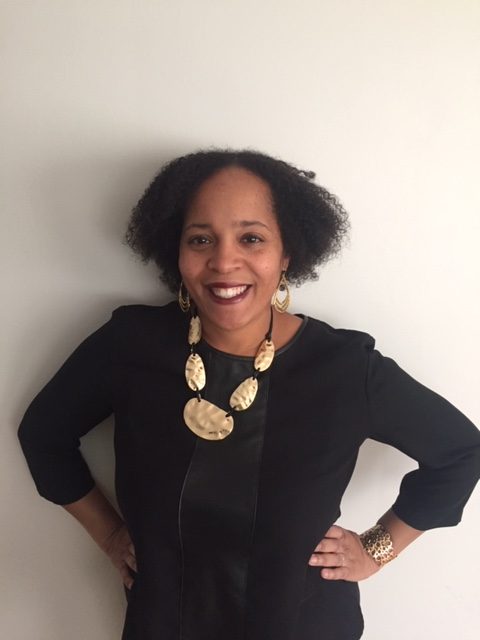
In 2023, after 20 years of conducting research with Philliber Research & Evaluation, Dr. Randi Burlew became Philliber’s first Director of Research & Equity. I sat down with Randi to learn more about her position and the role of equity in Philliber more broadly, why she thinks equity in research is important, and her dreams for truly equitable evaluation.
To get us started, please describe your role at Philliber Research & Evaluation.
I am the Director of Research & Equity, and in that role I do two things. First, I still lead evaluation on projects. I keep a portfolio of around ten projects at any given time, where I’m providing oversight on our evaluation teams who are running projects for clients. And then, as Director of Equity, I do a couple of things. I provide equity-related trainings to staff, I serve as a resource for projects that I’m not on when there’s an equity component which we feel like every project has an equity component, and then I work on specific equity-related projects for our clients.
Why does an evaluation firm need a Director of Equity?
It’s important in all of our work, particularly since the majority of our work is with historically excluded communities, that our work be done with an equity lens, and so that’s one reason. But I also think it’s in alignment with our values as an organization that we really seek to be an equity-focused organization. We seek to be good partners with our clients and the communities that we work with, and we hope that our work here contributes to creating a more just and equitable society. Research is a tool, and tools can be used for good and tools can also be used to hurt people and communities. One of the ways that research can be used to hurt communities is by not using a racial equity lens or an equity lens more generally, by assuming that the dominant culture here is the norm by which all other communities should be compared, or assuming that when you look at the results of studies that people are the problems instead of understanding that systems are the problem. And so having an equity focus really helps us to avoid creating our work in ways that others can use it to create harm and destruction.
That’s very useful context, thank you. Can you give us an example of a research challenge you’ve faced that intersects with systemic racism?
Wow I would say just about everything we do intersects with systemic racism in some way or another. Racism is at the core of all the systems within our society, and so it’s impossible to operate within those systems and not intersect with systemic racism. There’s a lot of emphasis put on providing funding for evidence-based interventions. And while I think it’s important to be thinking about evidence-based interventions, what we often don’t think about is the fact that these evidence-based interventions are often only tested in the dominant group, and we just assume that if they work for the dominant group then they’re gonna work for every other community. So when communities who are not a member of the dominant group go to look for interventions of any sort, it’s very difficult to find an evidence-based curriculum that has been shown to be effective in your community. I think working specifically to look at how programs are effective in communities that have been historically excluded really helps make it possible for other communities outside of the dominant culture to be able to find resources and materials that truly are effective for their communities.
How do you leverage data to promote equity in the programs that you evaluate?
One of the things that we try to do is use an equity lens when we’re looking at our work. When we are looking at research, we’re not assuming that something that is the norm for the dominant culture is gonna be the norm for other cultures, and so we aim to help use our data and the research that we’re doing to really tell the stories of communities that have been historically excluded. We also work very collaboratively with communities, where we see ourselves bringing some research expertise and the communities bringing the expertise of their lived experiences. We approach our projects as if both of those types of expertise are critical, and so we work with advisory groups, with staff at our client sites, with beneficiaries of the programs, from design to dissemination, thinking about what questions we should be asking, how we should be asking those questions, how we should be interpreting the data, and how we can make sure that the results are accessible to everyone, not just a technical audience.
I’m thinking about how race is socially constructed, and how when we collect data, we often just ask people to self-identify in specific racial categories. When you’re creating data collection plans for your projects, how do you think about these categories of race, ethnicity, gender, sexuality, and other identities?
It’s a challenge, especially because a lot of our funders require data to be collected in a specific way, and that’s not always a way that allows people to identify themselves in a way that feels authentic to them. In those situations, we often don’t have a choice. Sometimes we will ask those questions in a couple of different ways, so that we get the data that the funder is interested in but we also get data that’s more closely to the values and the ways that the groups that we’re working with understand themselves. The most important thing is recognizing that the way that we understand different types of identities can change over time and geography, so not feeling stuck that because we’ve asked something this way in one community that we’ve gotta ask it the same way in a different community or just because we’ve always asked it this way we’ve gotta ask it that way now. We do a lot of work to try to keep up to date on how people are thinking about identity and we also work collaboratively with our clients to understand what feels the most authentic to them.
What are your dreams for truly equitable evaluation?
One is that I would hope that not just us as evaluators but our clients and funders would be thinking from a truly equitable perspective from the beginning, that we’re all on the same page when it comes to equitable evaluation, and that our funding would allow for some of the things that we think makes research more equitable. Those are things like paying for the lived experience of people in communities to help us understand both the work that we’re evaluating and the communities that we’re working with. We have some projects where we are not able to have a full advisory group because of funding limitations and we find ways to get community input in other ways in those cases. But in my world, we would have a community advisory group for every project and the members of that group would be paid for their expertise in helping us to carry out these projects. I think that’s probably the most important thing that we could do.
The other thing is that we would continue to grow in our understanding of what equitable research strategies look like, and what community-driven research strategies can look like. Many of us were trained in sort of the typical research strategies and methods, surveys, interviews, focus groups, but as we work with other communities and embrace other worldviews, we come to understand that there are other, more culturally responsive ways of collecting data and engaging communities that provide richer and more accurate work. In my dream world, we would be able to spend a lot more time really understanding and immersing ourselves in the various traditions of the communities that we work with to make sure that those types of research strategies are really engrained in all the work that we do.
What advice do you have for programs or other evaluation firms looking to create equitable and inclusive environments?
I think the most important thing that you can do is get community input and community feedback. That is the most important thing. If you want to collect data, you should be asking communities how they understand the issue that you’re interested in, what questions they’re interested in about that issue, what they think you need to know in order to be a good research partner in doing this type of work, and you should be involving them in every stage of your research process – from design to dissemination. One of the most powerful things I think we do are meaning making sessions, where after we’ve collected the data and run some preliminary analysis, we bring in our stakeholder groups or community members or advisory groups to help us understand the data. There have been times where our interpretations of the data are just off the mark or there are things that were missing, and we would not have understood that were it not for the expertise of these groups.
I’ll end this interview with the question we often like to end with at Philliber: is there anything I didn’t ask you about that you’d like to share with me today?
I think one of the reasons that we are such an equity-focused organization is that outside of our work, many of us are very involved in our communities, whether they are communities that are related to our affinity groups, or just communities that we live in. Many of us also come to this work having experience working for nonprofit and social service organizations as well. I think that informs the way that we think about this type of work – how we make it useful, how we make it relevant, what does it feel like to be the person on the ground, what does it feel like to be the community that’s being studied. And I think that really is a driving force for us to be an equitable organization because we have those types of viewpoints of the work that we’re doing.

